
Gutter Guard Installation in Denver: What Homeowners Should Know
Gutter guards can reduce the amount of leaves, pine needles, roof granules, and windblown debris entering a gutter system. For Denver-area homeowners, that can mean fewer clogs, less frequent cleaning, and more dependable drainage during spring snowmelt and summer thunderstorms.
However, gutter guards are not maintenance-free, and they cannot correct leaking, sagging, improperly pitched, or undersized gutters. The existing system should be cleaned and inspected before any protection product is installed. This guide explains when gutter guards make sense, what professional installation involves, and which factors should be considered when selecting a system for a Colorado home.
When Gutter Guards Make Sense for Denver Homes
Gutter guards may be a worthwhile addition when a home experiences recurring clogs from leaves, pine needles, roof granules, or windblown debris. They can be especially helpful on two-story homes and properties where frequent gutter cleaning is difficult or unsafe.
A properly selected and installed gutter guard system can:
Reduce the amount of debris entering the gutters
Help water move toward the downspouts during heavy rain and snowmelt
Reduce how often the gutters require cleaning
Limit clogs that can contribute to overflowing water
Make routine gutter maintenance more manageable
Gutter guards do not eliminate maintenance completely. Debris can still collect on top of the guards, and the gutters and downspouts should be inspected periodically. Guards should only be installed after confirming that the existing gutters are securely attached, correctly pitched, and capable of handling the home’s drainage needs.
How Professional Gutter Guard Installation Works
Successful gutter guard installation involves more than attaching a cover to the top of a gutter. The existing system must first be evaluated for leaks, loose fasteners, improper pitch, inadequate downspout capacity, and other drainage problems. The guard must then be matched to the gutter, roof, surrounding trees, and types of debris commonly found around the home.
Kelly Custom Seamless Gutter Co. installs gutter guards as part of a complete gutter system or on suitable existing gutters throughout the Denver Metro area. Each installation begins with an inspection so problems can be corrected before they are concealed beneath the guards.
Choosing the Right Gutter Guard for a Denver-Area Home
No single gutter guard is ideal for every property. The best option depends on the type and amount of nearby debris, the home’s roof design, the condition and size of the gutters, and how quickly the system must move water during Colorado’s heavy rain and snowmelt.
Important factors include:
Surrounding trees: Leaves, pine needles, seeds, and small debris may require different guard designs.
Gutter condition: Loose, leaking, sagging, or improperly pitched gutters should be repaired or replaced before guards are installed.
Gutter capacity: The guard must allow sufficient water into the gutter without restricting drainage.
Roof design: Roof pitch, valleys, and concentrated runoff affect how water reaches the gutter.
Durability: A professionally installed metal system generally provides better long-term performance than temporary foam or brush inserts.
Maintenance access: The system should allow future inspection and cleaning when necessary.
Professional Metal Gutter Guard Options
Kelly Custom Seamless Gutter Co. installs durable metal gutter guards selected according to the home, gutter system, roof design, and surrounding debris. Unlike temporary foam or brush inserts, professionally fitted metal guards are designed for more dependable, long-term performance.
Real Gutter Cover
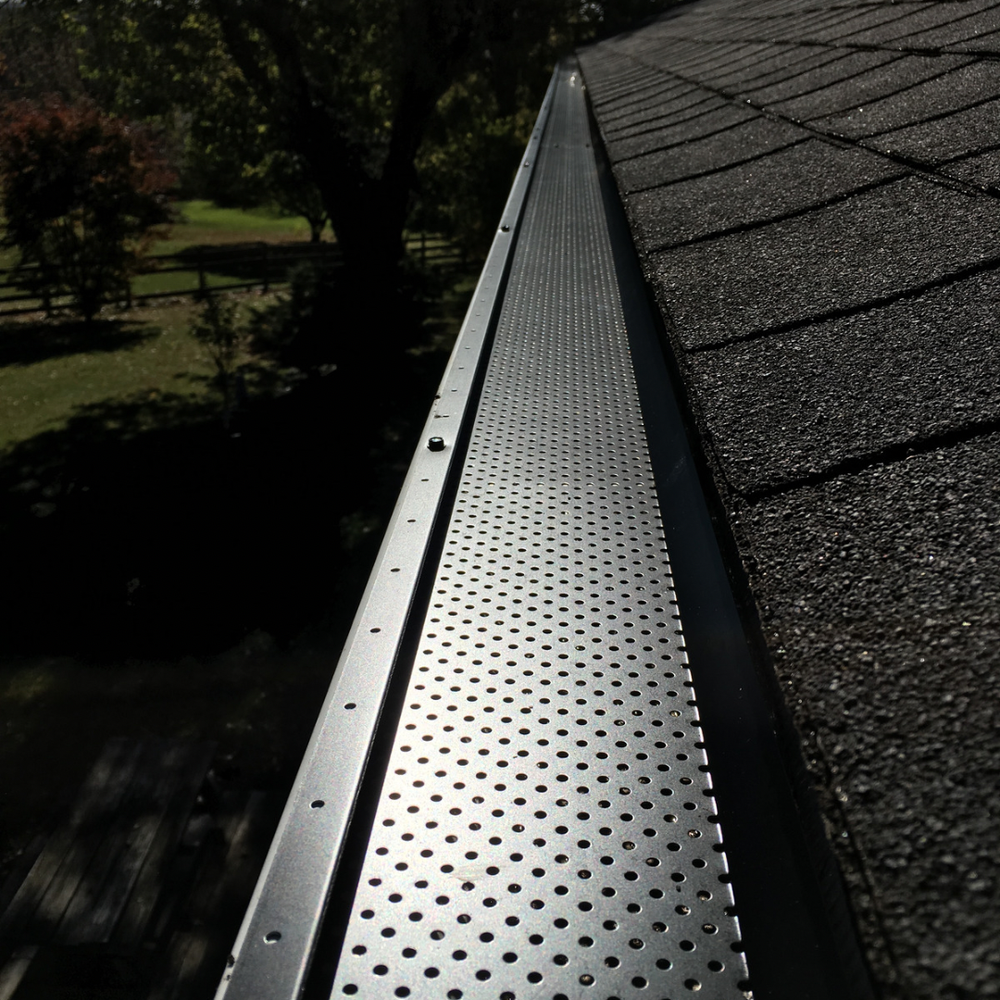
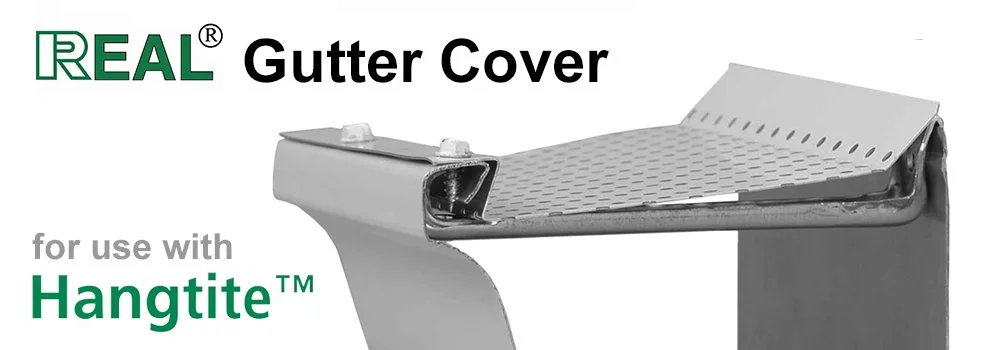
Real Gutter Cover uses a solid, perforated metal surface to help keep leaves and larger debris out while allowing water to enter the gutter. Its low-profile design follows the roof edge for a clean, finished appearance. It may be a good option for homes exposed to leaves, twigs, and other common debris.
EZ Leaf Destroyer
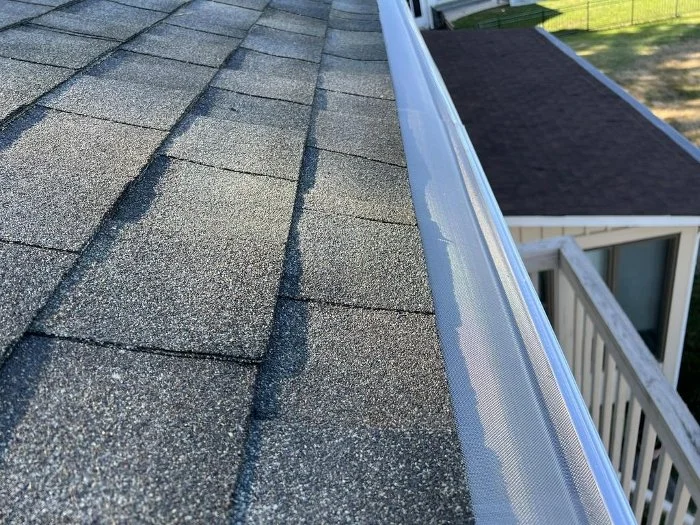
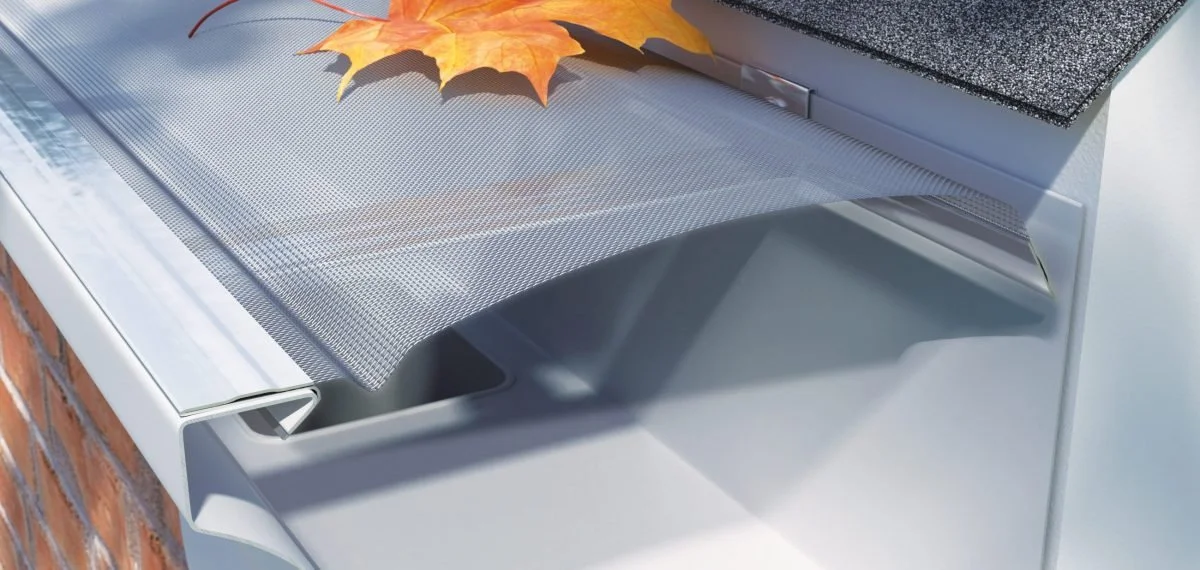
EZ Leaf Destroyer uses fine stainless-steel micro-mesh to help prevent smaller debris from entering the gutter. This style may be especially useful around pine needles, seeds, roof granules, and other material capable of passing through guards with larger openings.
The best choice depends on the home rather than the product name alone. Charlie can inspect the gutter system, discuss the debris affecting the property, and recommend the most practical option.
What Professional Gutter Guard Installation Includes
Inspecting the Existing Gutter System
Before installing guards, the gutters should be checked for leaks, sagging, loose fasteners, improper pitch, damaged sections, and inadequate drainage. Problems found during the inspection should be corrected first because gutter guards will not repair an existing system.
Clearing the Gutters and Downspouts
Leaves, roof granules, sediment, and other accumulated material must be removed from the gutters. Downspouts and outlets should also be checked for obstructions so water has a clear path away from the home.
Measuring and Fitting the Guards
The gutter guards are measured and fitted to the existing gutter system and roof edge. Valleys, inside corners, outside corners, and areas of concentrated runoff may require additional attention to manage water properly.
Securing the System
Each section is installed securely and aligned to help prevent shifting, gaps, and debris entry. The installation method should protect the gutter’s drainage capacity without interfering with the roof or creating unnecessary openings along the system.
Completing a Final Inspection
After installation, the gutter guards, outlets, downspouts, fasteners, and transitions are inspected. The completed system should provide a consistent fit while remaining accessible for future inspection and maintenance.
Do Gutter Guards Still Require Maintenance?
Gutter guards reduce debris buildup and the frequency of gutter cleaning, but no system makes gutters completely maintenance-free. Leaves, pine needles, seed pods, roof granules, and other material can collect on top of the guards or gather near roof valleys and inside corners.
Denver-area homeowners should periodically check the system, particularly after severe storms, high winds, heavy leaf fall, or significant snow and ice. Signs that the gutters need attention include:
Water flowing over the gutter edge
Debris accumulating on top of the guards
Slow drainage from a downspout
Water collecting behind or beneath the gutter
Loose, shifted, or damaged guard sections
Two-story and steep-roof inspections can be dangerous. If the system cannot be checked safely from the ground, contact an experienced gutter professional rather than climbing onto the roof or working from an unsafe ladder position.

Why This Porch Needed Gutter Guards
A large tree in the front yard repeatedly dropped leaves into the gutter above this home’s covered porch. Because the problem was concentrated in this area, the homeowner needed a targeted solution that would reduce recurring debris buildup while preserving proper drainage.
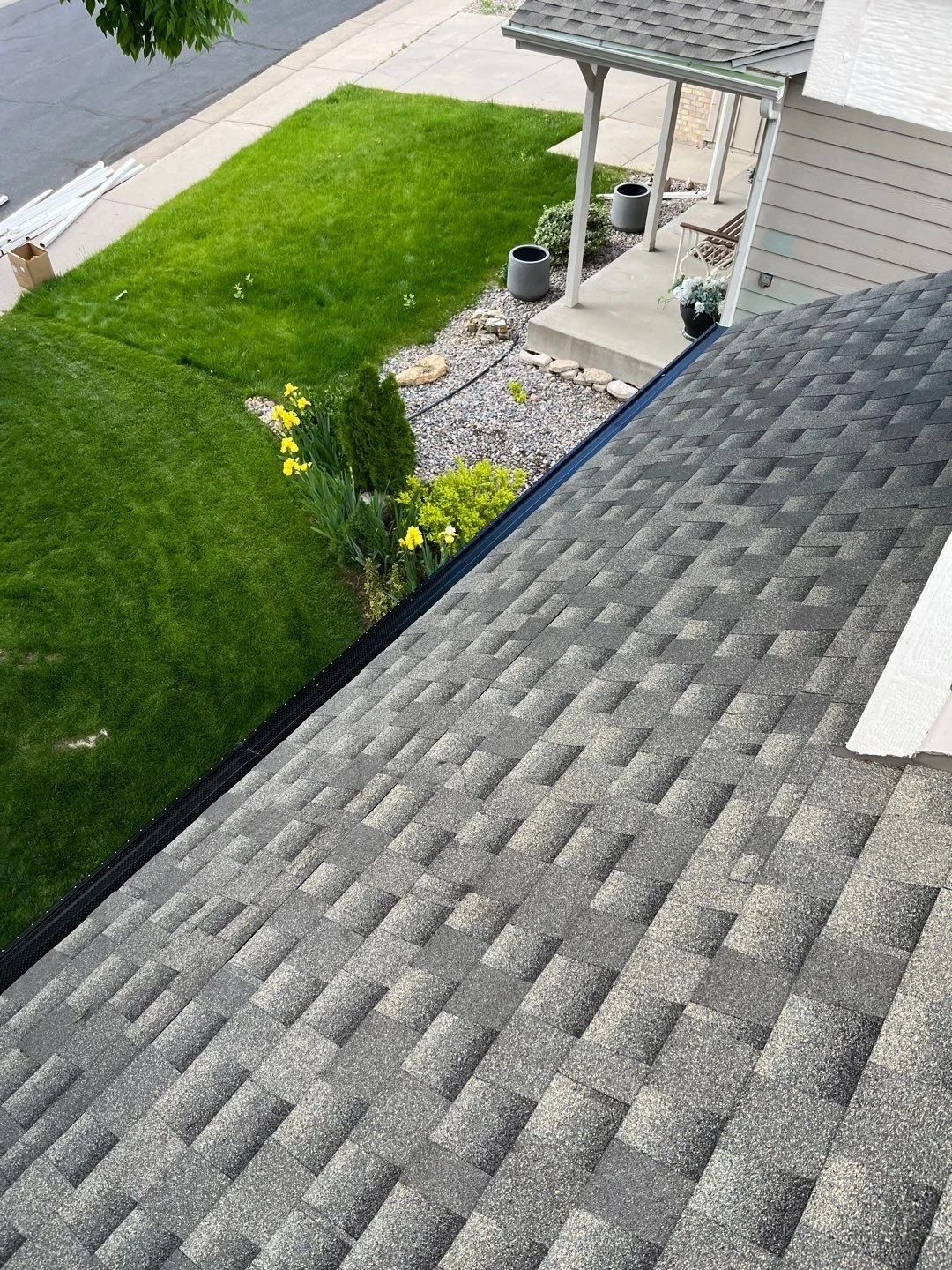
Real Gutter Cover Installed Over the Porch
Kelly Custom Seamless Gutter Co. installed Real Gutter Cover along the affected porch gutter. The finished metal system helps keep leaves out while allowing rainwater and snowmelt to enter the gutter and drain through the downspout.
Professional Gutter Guard Installation in the Denver Metro Area
The right gutter guard can reduce recurring clogs and make a gutter system easier to maintain, but proper product selection and installation are essential. The existing gutters must be in good condition, drain correctly, and have enough capacity for water coming from the roof.
Kelly Custom Seamless Gutter Co. has served Denver Metro homeowners since 2004. Charlie can inspect your existing gutters, explain whether guards are appropriate, and recommend a practical system based on your home, surrounding trees, and drainage needs.
Learn more about our gutter guard installation service, or contact Charlie directly to schedule a free on-site estimate.