
5-Inch vs. 6-Inch Gutters: Which Size Is Right for Denver Homes?
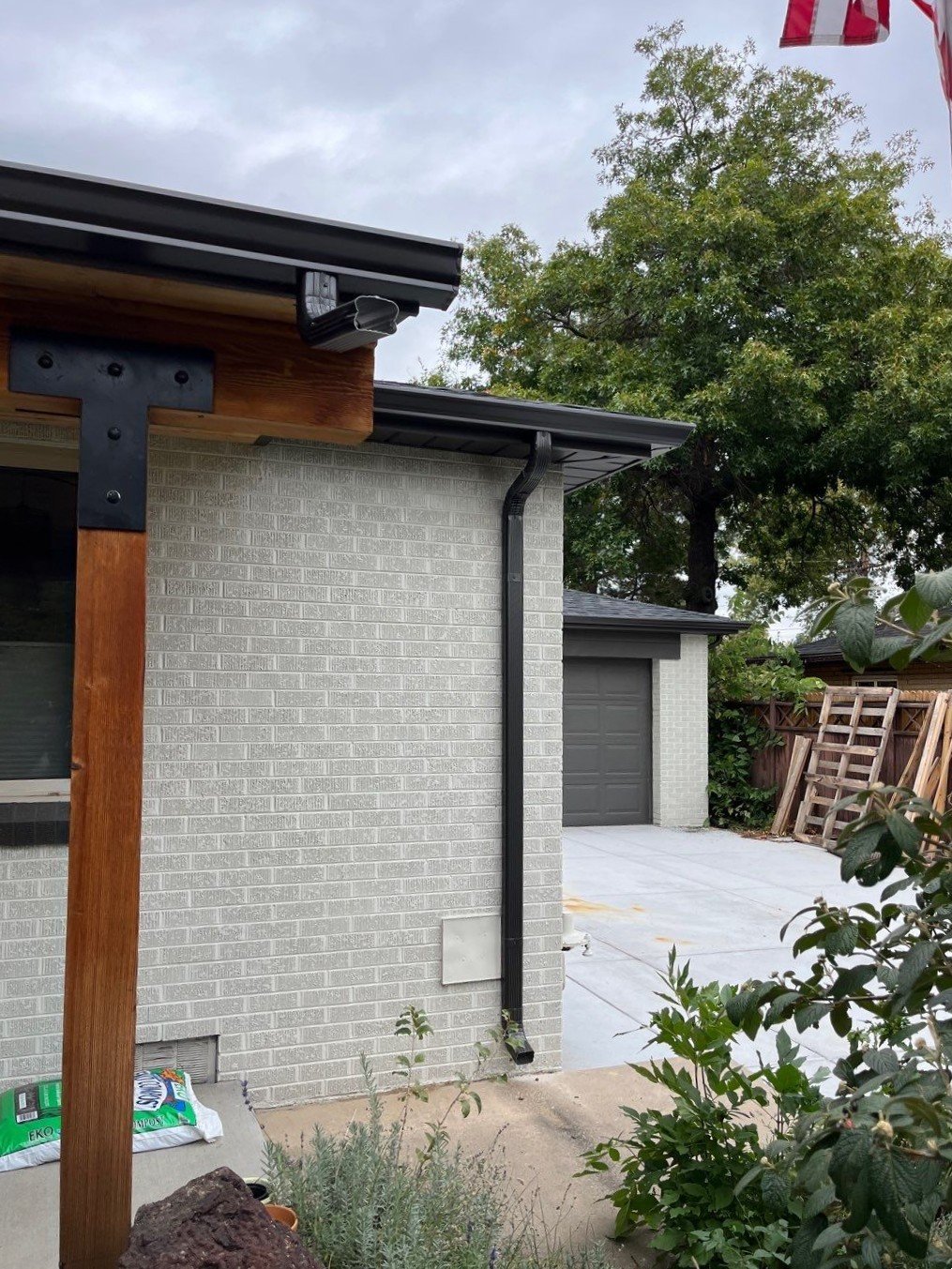
5-Inch Gutters With 2×3-Inch Downspouts
This residential installation pairs 5-inch seamless gutters with standard 2×3-inch downspouts for a clean profile and dependable drainage.
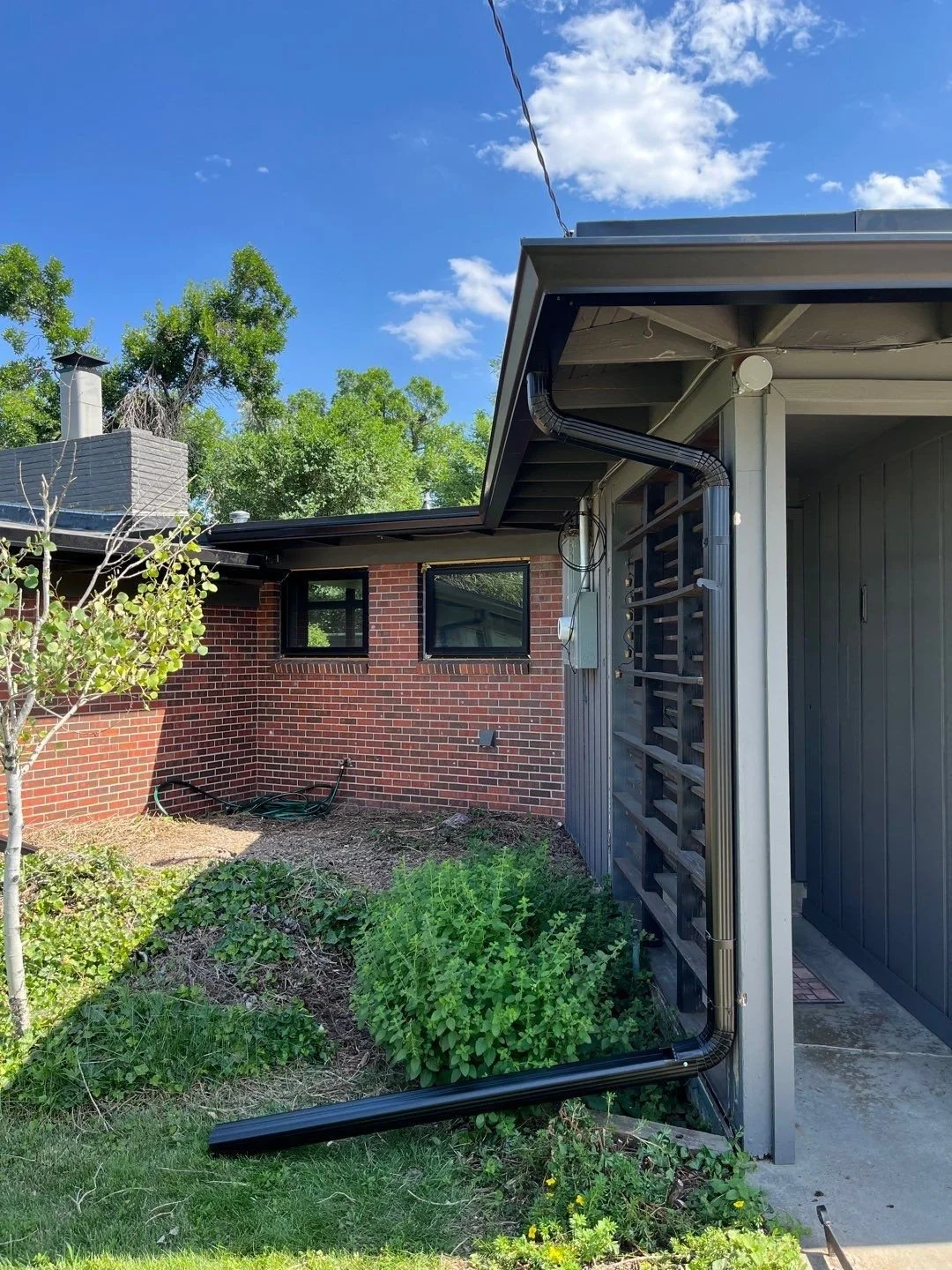
6-Inch Gutters With 3×4-Inch Downspouts
This higher-capacity system combines 6-inch seamless gutters with oversized 3×4-inch downspouts to move a greater volume of roof runoff.
Choosing between 5-inch and 6-inch gutters involves more than selecting the larger option. The correct size depends on how much water reaches each gutter run, how quickly it arrives, and whether the downspouts can move that water safely away from the home.
Many Denver-area homes perform well with properly designed 5-inch seamless gutters. Others benefit from 6-inch gutters because of large or steep roof sections, concentrated runoff from valleys, complex rooflines, or areas where the existing gutters regularly overflow.
This guide explains how 5-inch and 6-inch seamless gutters differ, when each size may be appropriate, and why gutter size, pitch, outlet placement, and downspout capacity should be evaluated as one complete drainage system.
Before the first snowstorm, make sure to clear out any debris in your gutters. This simple step is essential for gutter maintenance in snow, as it allows melted snow and ice to flow through the system without obstruction.
What Is the Difference Between 5-Inch and 6-Inch Gutters?
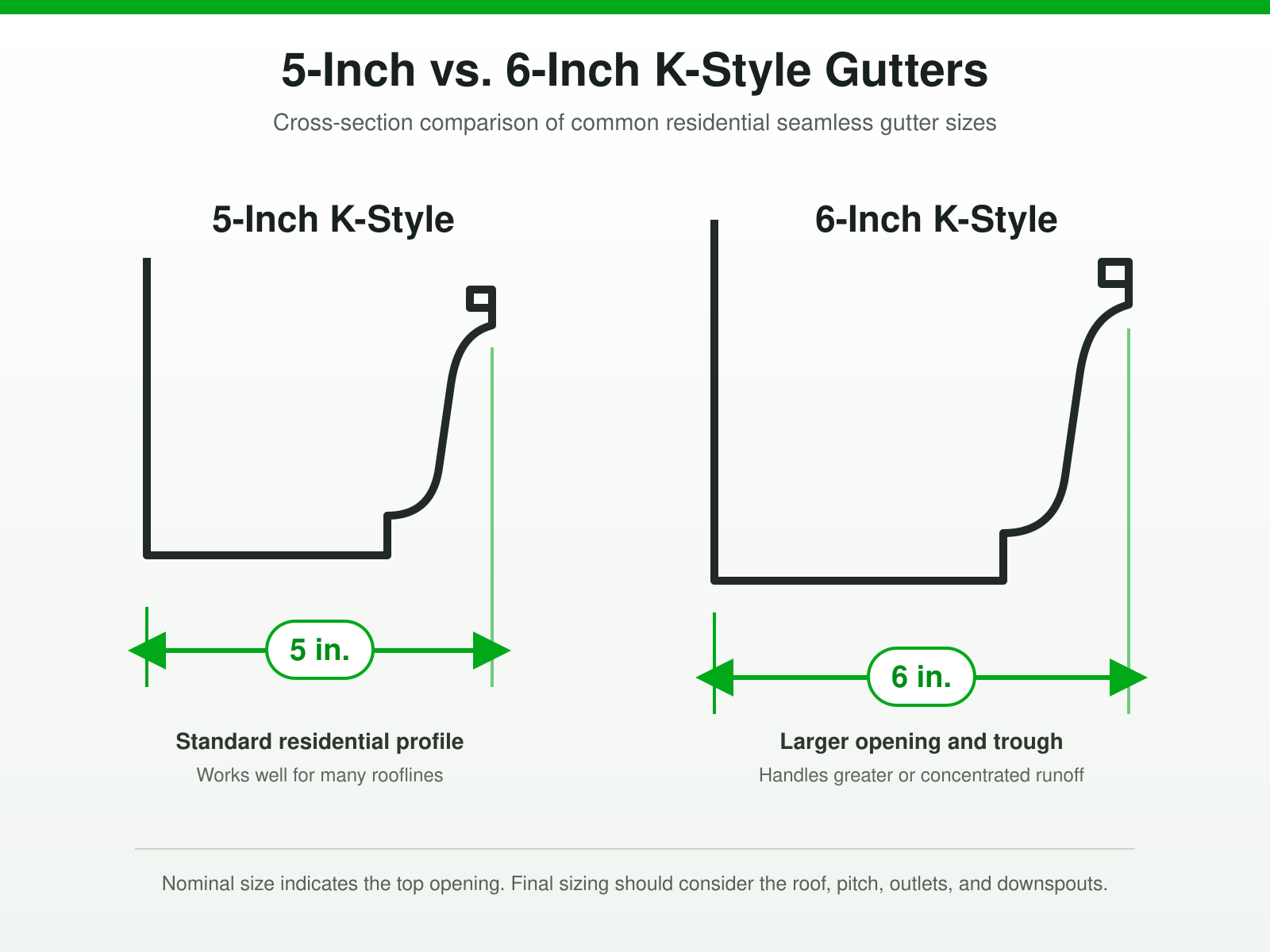
The stated size generally refers to the width across the top opening of the gutter. Although one inch may not sound significant, a 6-inch gutter has a larger trough and can accept more runoff than a comparable 5-inch system.
5-Inch Seamless Gutters
Five-inch K-style gutters are commonly used on residential properties and work well for many Denver-area homes. When properly pitched and paired with correctly placed downspouts, they can provide dependable drainage for straightforward rooflines and typical roof areas.
Their smaller profile also gives them a clean, proportional appearance on many one- and two-story homes.
6-Inch Seamless Gutters
Six-inch K-style gutters provide additional capacity and a wider opening to catch water coming off the roof. They may be appropriate for large or steep roof sections, tile roofs, complex rooflines, concentrated valley runoff, and gutter runs with a history of overflowing.
A 6-inch system is not automatically necessary for every home. Its value depends on the roof and drainage layout rather than size alone.
When 5-Inch Gutters Are Usually the Right Choice
Properly designed 5-inch seamless gutters provide sufficient capacity for many Denver-area homes. They are often a practical choice when:
The roof has a straightforward layout without large sections draining into one short gutter run
The roof pitch is moderate
Valleys do not concentrate excessive runoff into a small area
The gutters can be installed with the correct pitch
There is enough room for properly positioned 2×3-inch or 3×4-inch downspouts
The existing 5-inch system has handled heavy rain without recurring overflow
Both 2×3-inch and oversized 3×4-inch downspouts are commonly installed with 5-inch gutters. The appropriate choice depends on the roof area, gutter-run length, outlet placement, and amount of water that each downspout must carry.
Five-inch gutters should not be dismissed simply because a larger option is available. Correct layout, outlet placement, and downspout capacity often matter more than increasing the gutter size without addressing the rest of the drainage system.
When 6-Inch Gutters May Be the Better Choice
Six-inch seamless gutters provide a wider opening and greater capacity than 5-inch gutters. They may be the better choice when a home has:
Large roof sections draining into limited gutter runs
Steep roof pitches that send water toward the gutter quickly
Tile or other roof designs that cause runoff to overshoot a smaller gutter
Multiple roof valleys concentrating water in the same area
Complex rooflines with difficult drainage conditions
A history of overflow despite properly pitched, clean gutters
Limited opportunities to add more downspouts
Six-inch gutters are commonly paired with oversized 3×4-inch downspouts to move a greater volume of water through the system. Outlet size and downspout placement still matter; installing a larger gutter without an adequate exit for the water may not correct the original drainage problem.
Because 6-inch gutters have a larger profile, the roof design, fascia, and appearance of the home should also be considered before selecting them.
Why Gutter Size Is Only Part of the Drainage System
Installing a larger gutter does not automatically solve overflow or drainage problems. Several parts of the system must work together.
Gutter Pitch
Each gutter run needs enough pitch to move water toward its outlets without creating low spots or standing water. A poorly pitched 6-inch gutter can perform worse than a correctly installed 5-inch gutter.
Outlet and Downspout Capacity
Water must be able to leave the gutter as quickly as it enters. Outlet size, downspout dimensions, and the number and placement of downspouts all affect the system’s capacity.
Roof Valleys and Concentrated Runoff
Roof valleys can direct a large amount of water into a short section of gutter. These areas may require a larger gutter, an additional outlet, an oversized downspout, or another carefully planned drainage solution.
Gutter-Run Length
Long gutter runs place more demand on each outlet and downspout. Dividing the drainage between properly positioned downspouts can sometimes improve performance more effectively than increasing gutter size alone.
Installation Quality
Hanger spacing, secure attachment, accurate pitch, properly sealed corners, and correctly placed outlets all contribute to dependable drainage. Even the correct gutter size can fail when the system is poorly designed or installed.
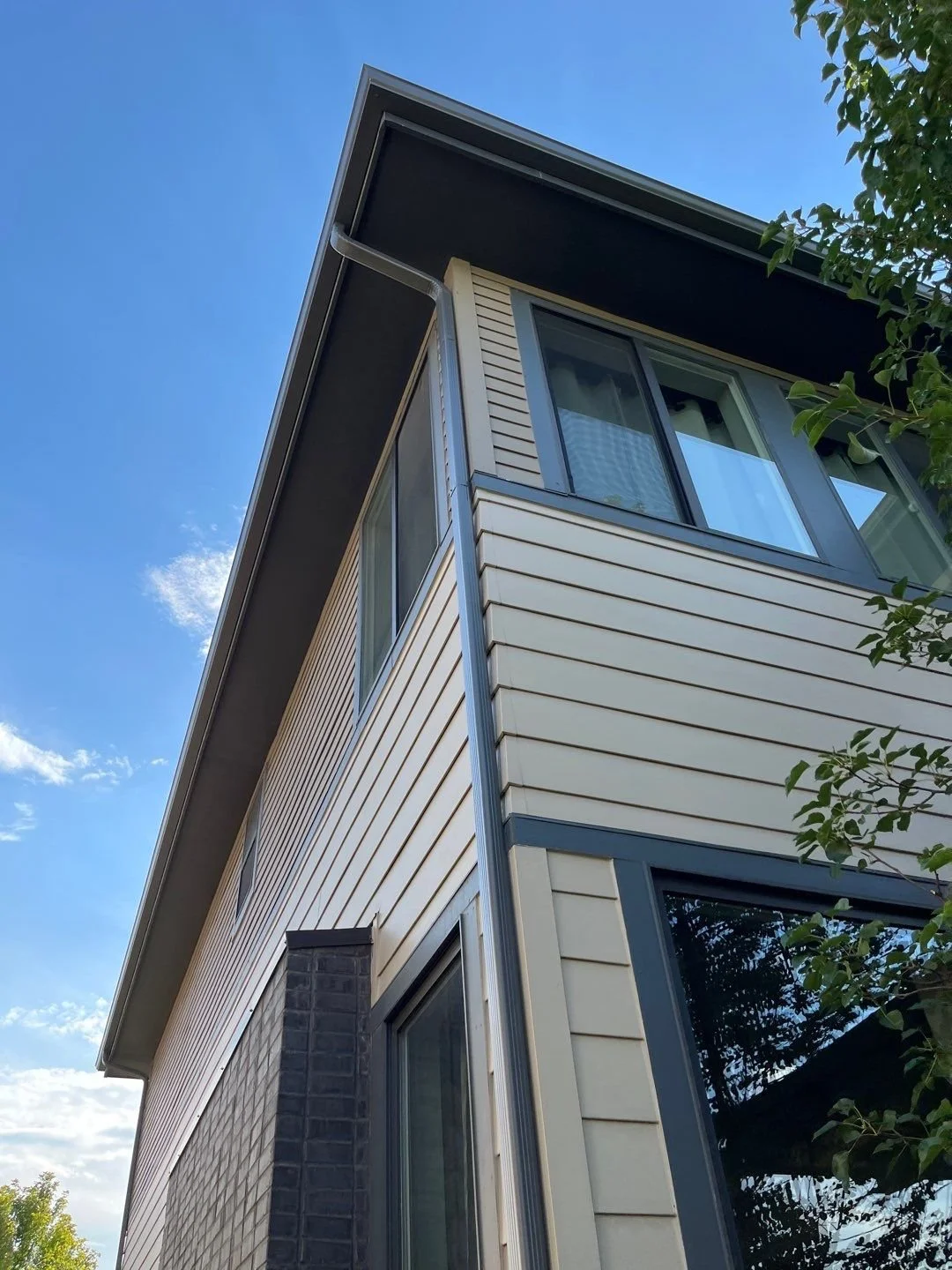
5-Inch Gutters With 2×3-Inch Downspouts
Custom 5-inch seamless gutter system paired with a standard 2×3-inch downspout on a Denver home.
Should Every Denver Home Have 6-Inch Gutters?
No. Six-inch gutters offer more capacity, but many Denver-area homes drain properly with 5-inch seamless gutters. Recommending the larger size for every property ignores the roof layout, downspout plan, appearance, and actual cause of any existing drainage problem.
A 5-inch system may be the better choice when the roof is uncomplicated and there is sufficient space for well-positioned outlets and downspouts. A 6-inch system may provide worthwhile additional capacity on homes with large, steep, or complex roof sections.
The goal is not to install the largest gutter available. It is to design a balanced system that catches runoff, moves it efficiently through the gutters, and discharges it safely away from the home.
Signs Your Current Gutter System Needs to Be Reevaluated
Overflow does not always mean the gutters are too small, but repeated drainage problems warrant a closer inspection. Warning signs include:
Water regularly flowing over the front edge during heavy rain
Runoff overshooting the gutter on steep roof sections
Overflow concentrated below roof valleys
Standing water remaining after a storm
Downspouts draining slowly even when they are clear
Water staining the fascia, siding, or areas beneath the gutter
Soil erosion or pooling water near the foundation
Gutter sections pulling loose under the weight of retained water or debris
Before increasing the gutter size, the system should be checked for clogs, incorrect pitch, insufficient outlets, poorly positioned downspouts, and damaged sections. The inspection may show that the home needs 6-inch gutters, oversized downspouts, a better layout, or repairs to the existing system.
Get the Right Seamless Gutter Size for Your Denver-Area Home
Kelly Custom Seamless Gutter Co. installs custom 5-inch and 6-inch seamless gutter systems throughout the Denver Metro area. Since 2004, Charlie has helped homeowners choose practical drainage solutions based on roof design, runoff, downspout requirements, and the needs of the property—not a one-size-fits-all recommendation.
If you are replacing worn or undersized gutters or planning a new seamless gutter installation, Charlie can evaluate your home and explain which gutter and downspout combination makes the most sense.
Learn more about our gutter replacement and seamless gutter installation services, or contact Charlie directly for a free on-site estimate.